For directors of warehouse and logistics operations in FMCG, electronics, automotive, and e-commerce logistics, the loading dock is where tight dispatch schedules most often unravel. A truck may arrive on schedule, inventory may be ready, and warehouse space may be available, yet shipments can still be delayed at the loading dock. Workers must position pallets, move cartons, handle irregular packages, and coordinate transfers between vehicles and facilities. These final movements often involve repetitive physical work and changing operating conditions. As shipment volumes grow, manual handling can become a bottleneck that affects dock availability and downstream production schedules.
Where the “Last 30 Meters” Fits the Supply Chain
At Engoal, we view this final transfer stage as an important part of end-to-end material flow. Loading and unloading systems automate the movement of goods between trucks, containers, warehouses, and production areas. By combining mechanical handling, intelligent control, and, where appropriate, robotics and machine vision, an automatic loading and unloading system can help businesses improve consistency while connecting dock operations with broader logistics workflows.
Why Manual Docks Struggle to Scale
Traditional dock operations often depend on forklifts, manual labor, and coordinated vehicle positioning. These methods remain practical for many facilities, but throughput can vary with cargo arrangement, staffing levels, vehicle dimensions, and the amount of repositioning required. Mixed shipments and irregular stacking introduce further complexity, particularly when workers must repeatedly enter trailers or containers to retrieve goods.
Our approach at Engoal is to match automation to the actual handling task rather than assume every dock needs the same equipment. Our loading and unloading systems can address palletized goods, mixed cartons, parcels, and bagged materials through different handling configurations. Automating repetitive transfer activities may reduce manual workload and support more predictable dock operations, while site planning determines how much improvement a specific installation can achieve.
The Hardware Behind Autonomous Handling
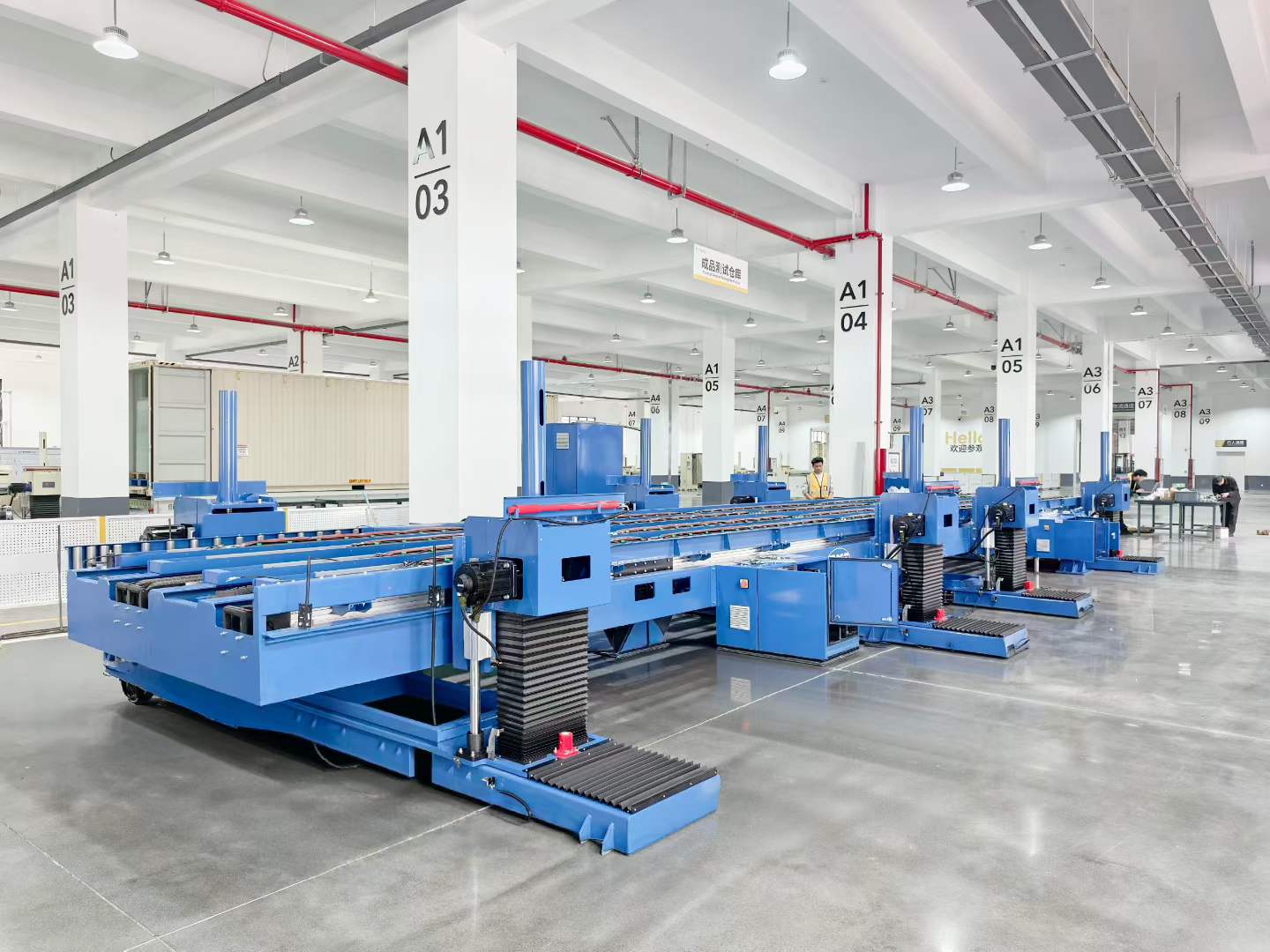
An automatic loading and unloading system typically combines mechanical transfer equipment with positioning devices, sensors, control software, and safety-related components. Depending on the application, the hardware may include conveyors, guided forks, robotic arms, lifting mechanisms, and vehicle alignment equipment. These components perform different roles: positioning establishes a workable transfer interface, while the handling mechanism moves cargo through the required path.
At Engoal, our Pallsol Series focuses on pallet loading and unloading for trucks and containers, combining functions such as automatic docking, positioning, flexible airbag lifting, and adaptive adjustment for different cargo and vehicle configurations. Depending on the configuration, loading or unloading can typically be completed within 5–10 minutes per truck. For mixed cartons and irregular cargo, our Messol Series uses robotic manipulation and AI vision to identify cargo positions and stacking patterns, with throughput reaching 350–1,000 cartons per hour depending on carton characteristics, stacking conditions, and system configuration.
Connecting Perception to Motion Planning
Mechanical equipment can transfer standardized loads along predefined paths, but variable cargo requires more contextual information. A carton may be tilted, partially obstructed, or stacked differently from the previous one. Without reliable detection and movement planning, a robot may struggle to select a suitable grasp, avoid neighboring items, or respond to changes inside a container.
We integrate AI vision, robotics, motion planning, and adaptive control into Engoal solutions for complex handling environments. In a robotic unloading workflow, perception helps identify visible cargo positions and stacking patterns; planning then determines an appropriate movement, and control coordinates the robot’s execution. The system must also account for equipment limits and safety conditions. These capabilities help our automatic loading and unloading system address mixed cargo more flexibly than equipment designed only for fixed arrangements, although performance still depends on the cargo and site conditions.
Matching Cargo, Vehicle, and System Type
System selection begins with the material being moved. Pallets generally require stable load transfer and appropriate alignment between the vehicle and dock. Mixed cartons and parcels may call for vision-guided robotic handling, while bags of grain, feed, fertilizer, or similar products require equipment suited to variable package shapes and handling conditions. Vehicle dimensions, load characteristics, throughput targets, and available floor space also influence the design.
Our Engoal product range reflects these differences. Pallsol supports palletized cargo, Messol targets carton and parcel handling, and Bulsol is designed for bulk and bagged materials. Rather than treating loading and unloading systems as interchangeable machines, we assess the task and select a suitable configuration. We can also connect dock automation with autonomous mobile robots (AMRs), conveying, sorting, palletizing, and warehouse management workflows where the project requires broader material-flow coordination.
What a First Deployment Actually Involves
A practical deployment starts with observing the current process. We review cargo dimensions and weight, stacking patterns, truck or container types, daily shipment volume, dock geometry, and existing warehouse interfaces. This assessment helps establish whether the main constraint is vehicle positioning, manual cargo transfer, irregular loads, or coordination between dock and warehouse operations. It also identifies the safety requirements and integration work that must be addressed before commissioning.
At Engoal, our project process can extend from feasibility analysis and solution design through installation, commissioning, training, maintenance, and technical support. We also consider how the automatic loading and unloading system will exchange information with warehouse or transport systems and how operators will manage exceptions. Defining baseline cycle times, labor requirements, and throughput targets allows the project team to evaluate results against actual operating needs instead of relying on theoretical capacity alone.
Planning Automation Around Your Dock Requirements
Effective dock automation depends on matching handling technology to cargo, vehicle conditions, throughput goals, and existing workflows. At Engoal, we develop loading and unloading systems for palletized goods, mixed cartons, and bagged materials, with options for integration into wider logistics operations. Businesses considering an automatic loading and unloading system can begin by documenting current bottlenecks, reviewing cargo and vehicle specifications, and discussing a suitable configuration with our team.